Electronic Music Academy

Electronic Music Academy | Nashville

Learn to produce the kind of quality electronic music you love from scratch in small classes through Garnish Music Production's Academy Program supported by Ableton, Native Instruments, and Apple. We begin by familiarizing students with their music production software, and take them through to mastering their finished EP to a professional standard. In this program at our boutique facility, students will benefit from our superior roster of instructors, including certified trainers and Grammy-winners, who will share their knowledge and techniques with you.

We are an official Ableton certified training center, and all GMP learners worldwide qualify for a 40% discount on Ableton Live. Alongside Ableton Live, students will be immersed in Logic Pro; Garnish is the only music production school in America endorsed by both Apple and Ableton, and all Garnish learners qualify for discounts on Sylenth (33%), and Serum (33%).

With projects to work on outside of class time, in and out of our studios, and our strategically placed mentoring sessions, students will write, produce, engineer, mix, master, and learn how to release and promote their very own EP. All diploma learners can book our professional acoustically treated mixing and mastering facility at no extra cost and will have access to our worldwide network of alumni. If UK music production qualifications do not obviously pertain to our students' goals, they (and perhaps more so their parents) can be rest assured that our music production program meets a national standard of accreditation.

Introduction to Music Production in Ableton

Students will get to grips with this revolutionary DAW within weeks of starting class. Through our hands-on instruction, students will discover the key concepts that Ableton Live offers, and discover why it is the DAW of choice for getting ideas together for electronic music producers. All GMP learners qualify for a 40% discount on Ableton and students will always be able to refresh themselves with free access to all of our free introductory and paid advanced online Ableton tutorials on Youtube during their program and after.

Electronic Music Composition

Overlooked by many, but so useful in the long run, our electronic music composition section will save students hours of hitting and hoping! We will provide you with tools that show which chords go well together for your style and show you how to program chords that work, bass lines that groove, and lead lines that are catchy.

Audio Engineering

The Electronic Music Academy teaches students the science of audio engineering and recording. The course is full of recording techniques, tips, and tricks, with special emphasis placed on recording and producing vocals because, even if we don't sing ourselves, we still need to be able to encourage, coach, and produce artists and session vocalists. The more we know about singing, vocal production, and recording vocals, the better the main part of our song - the lead vocal - is going to sound! Of course, even though we cover vocal technique, actual singing in class is not mandatory - it is OK just to listen!

Logic Pro

Many electronic music producers use Logic Pro in the later stages of their production process because of the sound quality and its suitability for finishing (arranging and mixing) tracks compared to Ableton; this is why we think it's important to learn how to use Logic Pro. We put students through official training and an examination to become an Apple Certified Pro in Logic Pro, so they walk away with another qualification at the end of their program, all included in tuition fees.

"I switched to Ableton from Logic many years ago, but after some A/Bing in my studio recently, I could hear that Logic sounded better than Ableton so I decided I needed to brush up in Logic to get the best of both worlds. I called Garnish and, of course the guys were great and got me back up to speed in no time" Jamie Jones

Mixing & Mastering

In the Mixing and Mastering section, we begin with material students would learn as professional engineers by covering acoustics and proper home studio setup. Then it's on to the essentials: in-depth EQ, filling the frequency spectrum, dynamic controllers, mixing vocals, generating a huge sound from few elements, and making all of a production's parts sound as one, exploring all the new amazing plugins used by professional mix engineers.

Electronic Sound Design

Many professional electronic music producers never move beyond subtractive synthesis in their entire careers, but in this program, we will cover subtractive, wavetable, granular, additive and frequency modulated synthesis. We will also discuss sampling, resampling, glitch, and more advanced beat-making techniques in this section as students develop their sound.

Advanced Ableton & Synthesis

By this point in the program, students will have gone deeper than many professional producers with their sound design skills. We take it even further by introducing students to additive, wavetable, and Max4Live devices. We will also cover advanced sampling, advanced warping, and Racks & Chains. At the end of the module, students will learn how to apply their skills to music for media (film and TV).

Live Performance

In the live performance section of the course, instruction will focus on finishing students' projects, offering bespoke advice in a concentrated blast of mentoring sessions, and on introducing Ableton Live for performance. Students will learn advanced MIDI applications for every live scenario in order to take tracks to the stage and perform them live for themselves and, if interested, for other artists.

Marketing & Branding

To finish off the program, students will learn how to create an effective electronic press kit (EPK), market and brand themselves, acquire genuine social media followers, and get the most out of digital distribution.

Field Trips

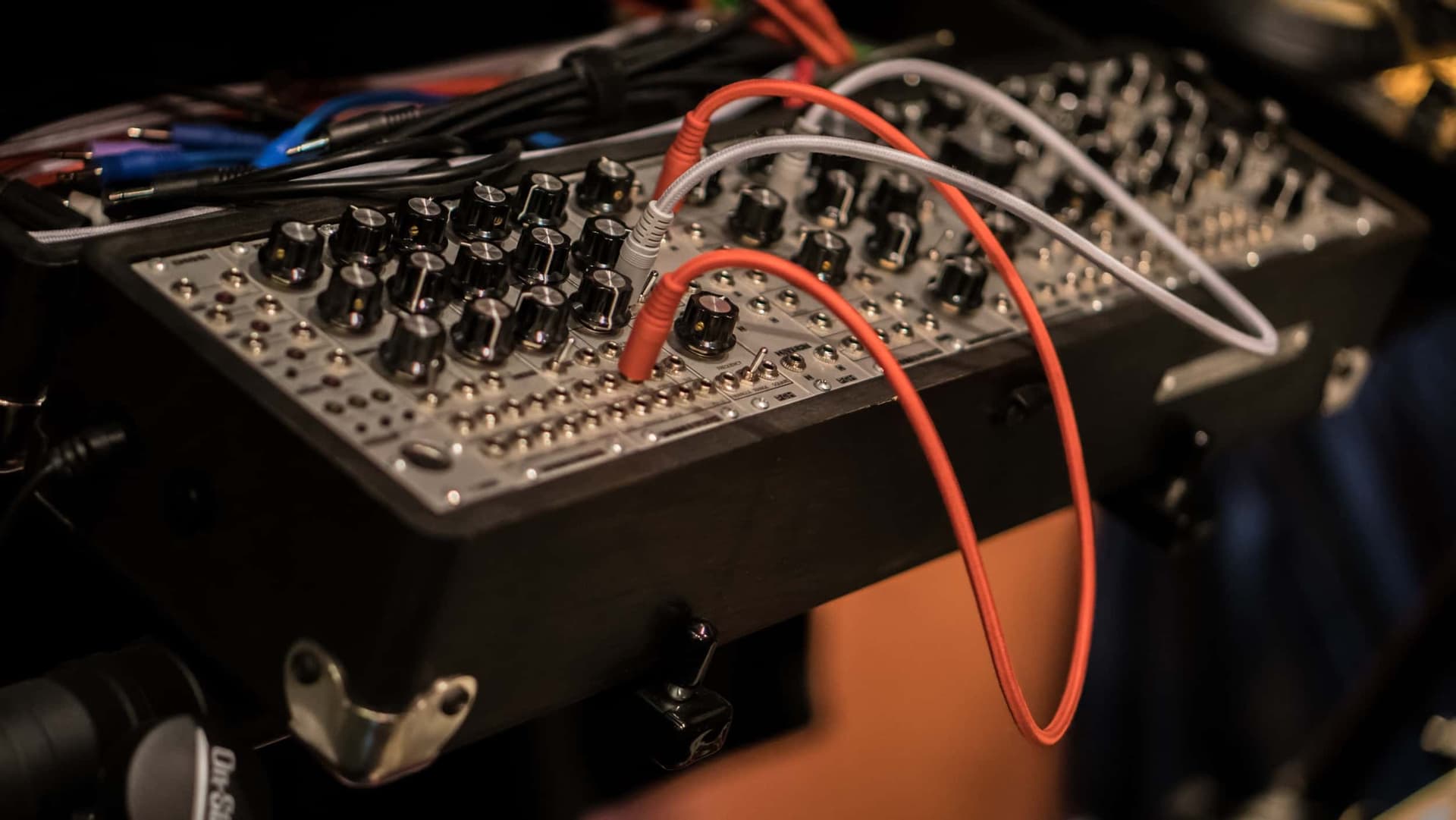
As part of the EMP program, students will enjoy hands-on training recording a band at a commercial recording studio. We also make use of a pre-production studio, where students can experiment and program in a room full of vintage analog synths and processors to find some real analog sounds for their tracks.


Check out some of our feedback from LA

Over 432 hours of tuition and uncapped studio time | $7999 + $300 registration fee | Payment plans

Academic Year | Three 10-week terms | Tuesdays & Thursdays | 11.30a – 6.30p

Term 1: 2nd Tuesday of September; Term 2: 2nd Tuesday of January; Term 3: Last Tuesday of April

Two Year Weekend | Six 10-week terms | Sundays | 11a – 6p

Term 1 & 4: 3rd Sun. of September; Term 2 & 5: 2nd Sun. of January; Term 3 & 6: Last Sun. of April (x2)

Two Year Evenings | Six 10-week terms | Tuesdays & Thursdays | 7p – 10p

Term 1 & 4: 3rd Tues. of September; Term 2 & 5: 2nd Tues. of January; Term 3 & 6: Last Tues. of April (x2)

Six Months (Two Ten-Week Terms) | Monday, Wednesday, and Friday | 11.30a – 6.30p

Term 1: January 28 | Term 2: April 22

Bespoke private tuition is also available for whole program. Contact us for more information.

Free this year: optional Hit Songwriting classes and mentoring from our Songwriting & Production Academy

To be in the loop when we release more dates, sign up to our newsletter towards the top right of this page. We don't send many, you can easily unsubscribe, and we never share our data with anyone, ever.

Testimonials

The course does a good job of expressing the importance of all aspects of music. Art of flow, synthesis, business, and marketing/branding are all building blocks of the aspiring musician pyramid. Armed with knowledge from each category (and of course good work ethic), anyone can navigate the long, crazy road to becoming a successful and happy musician.

Daniel Ferenbach

Class sizes were perfect, so there was a great balance of one on one instruction and instruction on broad topics.

Adam Booker

The course was very enjoyable, challenging, and fulfilling. The Garnish School is a great space to learn the fundamentals essential to becoming a strong, well-developed music producer. The instructors took the time to teach & explain complex software techniques, and designed special classes to illustrate specific aspects of music making,  and vocal recording techniques. The instructors were varied in their careers & producing styles, making for well-rounded instruction. The instructors were fun to engage with and were interested in building the students and our experiences. I'm so happy this school came to LA from London, and that I made the commitment to complete this course. I feel ready to jump forward and continue working on my music. Thanks to all the Garnish instructors and to Dave for creating this fantastic school!

Spencer Barnes @jaemisson

The Electronic Music Academy is a good time and super informative. I've been writing and producing music for the past year. There was so much I wanted to transcribe from my mind to my DAW, but I just didn't fully know how. Fortunately, the EMA course changed that in just a few short weeks. Very exciting! Not to mention the Garnish LA folks are super cool.

Patricia Seely

I came in knowing literally nothing and now I can make a quality track in just a day or two. Simple as that.

Jason Heffler @fluenceemusic

I came in knowing literally nothing and now I can make a quality track in just a day or two. Simple as that.

Jason Heffler

The course helped me learn exactly what I wanted to learn and more. It was super hands on which will help me retain what I learned in the course for a long time.

Benjamin S Shirken

I loved the small classes that made it easy to interact with the instructor and let you tailor the course to your needs and areas of improvement

Brazzabelle

I went to school at Stanford for three years and was been taught by many great professors, but I'm thoroughly convinced that my Ableton teacher in the EMP program is the best teacher I've ever had. The way he mixes new content, exercises, and little projects is really effective and I felt like I could do pretty much whatever I want in Ableton in just 2 weeks.

William Huang

A lot of knowledgable teachers that are down to earth and easy going… amazing teachers.

Anthony C

From the Blog

  • 360-Degree Video Footage Of A Class

    Samsung asked us if we'd like to borrow one of their prototype 360-degree cameras. We said yes and it didn't take us long to decide what to do with it! It's sphere-shaped device with a front and back lens.

  • 4 Core Principles of Music Production for Beginners

    Music is a powerful medium of communication. As Shakespeare himself asserted “When words fail, music speaks”. Technically speaking, the music or the songs that we hear comprise of two basic parts: the instruments (guitar, violin, piano, drums etc) and the vocals which are collectively known as ‘Trac

  • 5 Mixing Mistakes to Avoid

    by Katie Gilchrest When it comes to mixing, establishing a balance is one of the most important parts of creating a professional sounding production. Some of the same miscalculations are made again and again, and fortunately there are ways to recognize, avoid and fix them. Here are five common mixin

  • Audio Interfaces

    Audio Interfaces An audio interface is a piece of hardware that connects musical instruments, microphones, and other sound sources to a computer. The audio interface acts as a bridge between the analog audio signals from the instruments and the digital signals that the computer can understand and pr

  • Creative Uses for Melodyne

    Celemony's Melodyne is a highly sophisticated pitch analysis and correction software suite known mainly for its use in tuning vocals. As effective as it is in this capacity, Melodyne's capabilities allow for a range of other creative uses outside of simply correcting mistakes in performance. In this

  • DIY Home Recording Studio Tips

    As early as 2010, if you wanted to put together an album you were pretty much forced to shell out cash to a local recording studio. Or, even worse, you pretty much needed a record deal with a label of some sort.

  • Drum Miking Techniques

    Drum Miking Techniques: Recorder Man and Glyn Johns Katie Gilchrest's take on drum miking techniques Many considered the drum set one of the hardest pieces of equipment to mic in a studio. A drum kit is not one instrument, but a collection of multiple instruments, featuring a wide variety of differe

  • How To Improve Bass In Music

    How To Improve Bass In Music Bass can be a very complicated part of your mix. Actually, we’d even go and say that the majority of home-producers or home-recorded work, don’t have a good low-end, which is really the basis (get it, bass-is?) for any mix. In this article, we look at how to improve bass

  • How to Compress Drums

    The sound of modern drums in rock, pop, and electronic music very rarely embodies the natural range that acoustic drums are capable of. This is most often due to the application of compression, adding punchiness, energy and consistency to a drum track.

  • How to EQ Vocals

    How to EQ Vocals Katie Gilchrest's guidelines on how to EQ vocals. For most styles of music, vocals are one of the most important parts of the mix. Poorly EQd vocals can cause detriment and distraction to an otherwise great song. Equalization using a parametric EQ is a tool that can allow vocals to

  • How to Record Vocals When Producing A Singer - Vocal Production

    How to Record Vocals When Producing A Singer - Vocal Production By Chris Porter Firstly, let’s explode the myth that vocals are anything other than another instrument, or colour (depending on how you like to view things!) that you use to build up a musical picture. Yes, they convey language as well

  • Microphone Polar Patterns for Beginners

    by Katie Gilchrest Understanding how microphones “hear” is the first step in learning how to mic instruments properly. The directionality of a microphone is commonly explained as a polar pattern, and microphone use in the studio, as well as live settings vary based on each one. Understanding microph

  • Music Video Ideas for Artists — That Aren’t Music Videos

    Did you know that YouTube traffic makes up nearly a ⅕ of ALL internet traffic? Similarly, quite a bit of that is music consumption. It’s also common for labels to upload an audio tracks as video for YouTube,

  • Recording While Traveling

    A harmonious combination; new places, new people, new ideas and new sounds in different lands that present their own rhythms and culture can stir up something good in a natural and genuine way when recording while traveling. The perfect time to try new things, tune your ear, hone your craft, become

  • Simple Tips to Get Your Mixing Off to A Quick Start

    You’ve completed your recordings and now it’s time to put them all together. If you ask any experienced mixing engineer, they will tell you that they have a system they use every time they want to mix a project.

  • Skills Every Musician Should Know

    Whether you’re a budding producer, DJ or a brand new indie artist -- most of the time the focus is purely on the music, and that’s about it. However, soon enough, you’ll realize that there’s much more involved in just putting on music.

  • Sound Design with Macro Variations in Live 11

    By Heinrich Zwahlen The ability to store the state of Macro Controls as preset variations in Racks has drastically increased the functionality of these already...

  • Understanding Reverb

    Reverb is one of the most widely used time based effects in audio, and one of the most fascinating. Depending on how you use it, it can help or hinder your mix. Luckily, many parameters on reverb plugins are the same or similar, and can be explained across platforms. Understanding reverb is importan

  • What Are MIDI Interfaces?

    All about MIDI The MIDI (Musical Instrument Digital Interface) standard has had a profound impact on the music industry since its introduction in the early 1980s. MIDI allows electronic musical instruments, computers, and other digital equipment to communicate with each other, allowing for the creat

  • What does a music producer do?

    by Chris Porter It would be easy to write an entire article arguing about exactly what this question means, but the simplest answer (and the truth of the matter) lies behind the scenes - of whatever parameters the interested parties have agreed to. Allow me to explain… In today’s world of music crea

Daily News, Worldwide