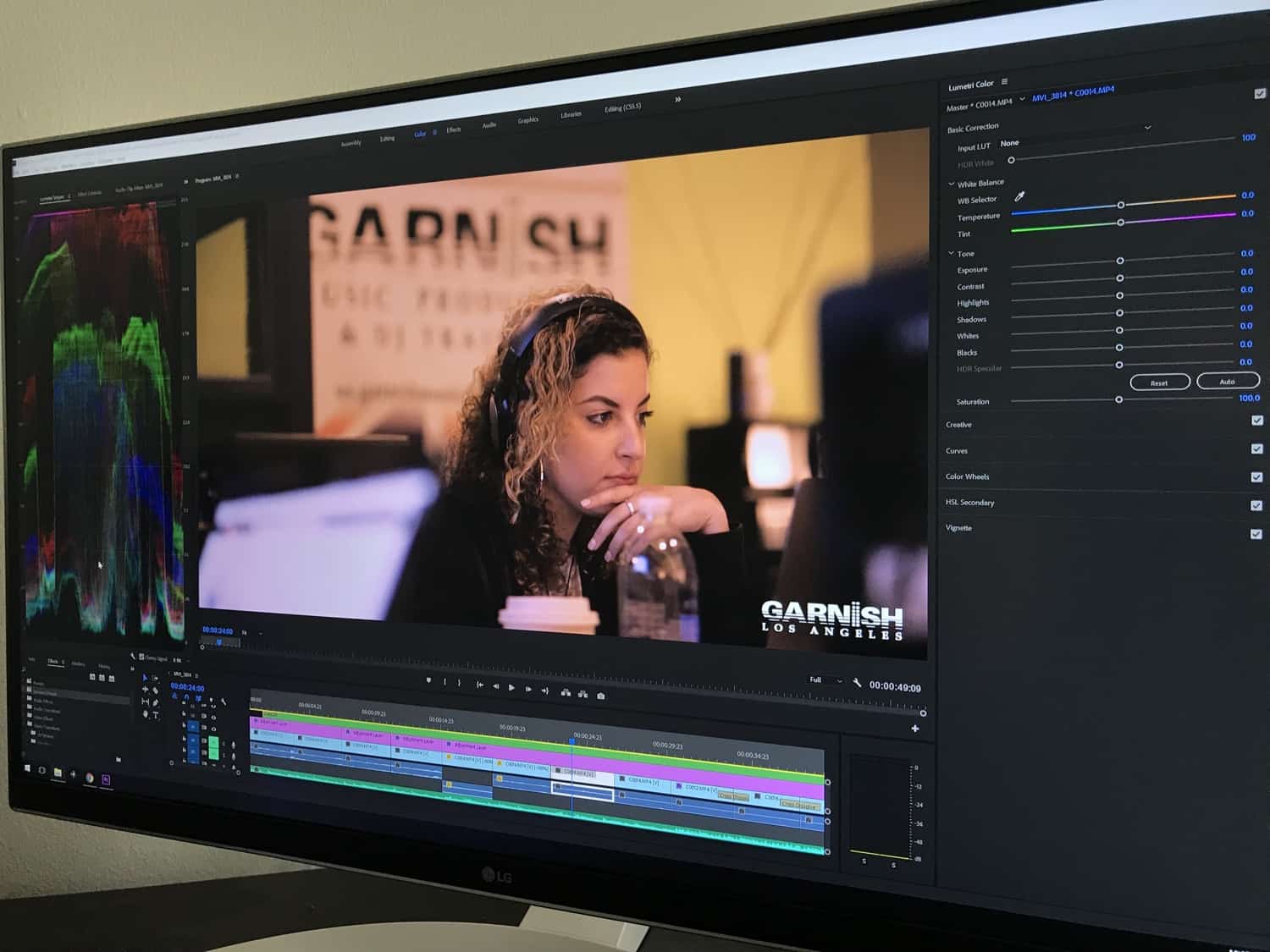
Video Production Class | Nashville
- →Location Scouting
- →Scripting/Script Writing
- →Storyboarding
- →Sensor Size and Crop Factor
- →Exposure Triangle and Achieving Proper Exposure
- →Shutter Speed and Frame Rates
- →Compressed Codecs vs Raw Video
- →Bit Rates and Color Spacing
- →F-stop/Aperture
- →Focal Length
- →Primes vs Zooms
- →Using Different Filters(ND/UV)
- →Importing Footage and Creating New Sequences
- →Use of Tools in Timeline
- →Color Grading and Visual Effects
- →Organizing Footage
- →Working with Proxies
- →Understand Different Codecs
- →Export Setting for Different Audiences/Channels
Student reviews.
“I wouldn’t change anything about any of the courses I did.”
Stefan Olsdal (Placebo)
Instructors
Common questions, answered.
Yes. The Video Production Class runs in person at Garnish Nashville and live online in the same sessions, using our music collaboration software, Muse - you join whichever suits you.
The Video Production Class runs in small groups in Nashville. Ask admissions at Garnish Nashville for the current dates and tuition.
Yes. The Video Production Class can be taught one-to-one, in person in Nashville or online, built around your own projects - ask admissions about private instruction.
Artists who need their own video, and anyone behind a camera for the first time who wants footage that is right in camera rather than fixed in the edit.
Planning first - location scouting, scripting and storyboarding - then the camera: sensor size, the exposure triangle, shutter speed and frame rates, codecs and bit rates, aperture, focal length, primes against zooms, and filters.
Bring what you have; the principles are the same on any camera, and the course is about getting the shot right rather than owning a particular body.
Let's get you started.
InquireSkills Every Musician Should Know
Whether you’re a budding producer, DJ or a brand new indie artist -- most of the time the focus is purely on the music, and that’s about it. However, soon enough, you’ll realize that there’s much more involved in just putting on music.
Read →More Creative Mixing Techniques
Creative mixing is all about taking a unique and innovative approach to the mixing process. Here are some tips to help you mix creatively:
Read →Creative Uses for Melodyne
Celemony's Melodyne is a highly sophisticated pitch analysis and correction software suite known mainly for its use in tuning vocals. As effective as it is in this capacity, Melodyne's capabilities allow for a range of other creative uses outside of simply correcting mistakes in performance. In this
Read →Equalization
Shelving, peak and graphic EQ, what lives in each frequency band, and how to cut and boost - with starting points for kick, snare and bass.
Read →How to Compress Drums
The sound of modern drums in rock, pop, and electronic music very rarely embodies the natural range that acoustic drums are capable of. This is most often due to the application of compression, adding punchiness, energy and consistency to a drum track.
Read →What Are MIDI Interfaces?
All about MIDI The MIDI (Musical Instrument Digital Interface) standard has had a profound impact on the music industry since its introduction in the early 1980s. MIDI allows electronic musical instruments, computers, and other digital equipment to communicate with each other, allowing for the creat
Read →